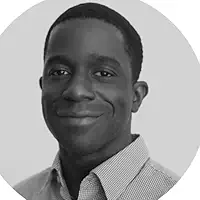
1) Tell us a little bit about yourself. How did you get into writing?
I grew up in Atlanta, Georgia, and I’ve always gravitated toward creative work. First it was music, then drawing, then eventually storytelling. I went to art school for media arts and animation, and while I was there I took a screenwriting course for animators that completely changed my life. The second I got exposed to writing scripts, I knew that was what I wanted to do. Ironically, I started out as a screenwriter with very little success. Looking back now, it’s because I just wasn’t a very good writer yet. I had imagination, but I didn’t have the technical skill or discipline to shape those ideas into something meaningful. Out of what was probably equal parts delusion and stubbornness, I decided to self-publish anyway because I wanted to prove people wrong about my stories. Somewhere in that process, though, I genuinely fell in love with the craft. I became obsessed with getting better. Better prose, better structure, better characters, better emotional honesty. Fast forward about fifteen years, and I’m still chasing that feeling.
2) What inspired you to write your book?

If I’m being completely honest, I originally started writing books as a way to earn extra income. I looked at what was selling the most at the time, saw romance dominating the charts, and thought, “How hard could it be?” So I started writing romance novels. I learned very quickly that writing purely for market trends is exhausting when you don’t genuinely love the genre. The passion just wasn’t there. Eventually I stopped asking, “What sells?” and started asking, “What do I actually love watching and reading when nobody’s telling me to?” The answer was always thrillers. Psychological thrillers. Crime stories. Conspiracies. Moral ambiguity. I love stories where trust constantly shifts and every conversation feels like there’s something dangerous sitting underneath it.That shift eventually became The Catalogue. The story actually started as a screenplay called The 5 Deadly Shooter, which was my homage to the classic martial arts film Five Deadly Venoms. Over time the story evolved, became darker, more psychological, more layered, and eventually transformed into the book readers know now.
3) What theme or message do you hope readers will take away from your book?
One of the biggest themes in The Catalogue is the illusion of control. A lot of the characters believe they’re the smartest person in the room, that they’re manipulating events, staying emotionally detached, or operating three steps ahead of everyone else. But throughout the story, you start seeing how fragile that control really is. I’m fascinated by what happens when people are pushed into situations where they can no longer hide behind strategy, titles, intelligence, or carefully constructed identities. Eventually pressure exposes who they really are. I also wanted to explore trust — how dangerous it can be, how necessary it is, and how easily it can be weaponized. Almost every major relationship in the book is built on incomplete information in some way. At its core, I think the story asks a pretty uncomfortable question: who do you become when survival matters more than morality?
4) What drew you into this particular genre?
I’ve always been drawn to thrillers because they strip people down to who they really are. In everyday life, people can hide behind routines, social expectations, status, or carefully crafted identities. But in thrillers, especially psychological thrillers, pressure exposes everything. I love stories where tension isn’t just coming from violence or action, but from uncertainty. Conversations where nobody is saying exactly what they mean. Relationships where trust constantly shifts. Characters trying to stay in control while quietly falling apart underneath. Thrillers also reward readers for paying attention, which I really enjoy as a writer. A line of dialogue can mean one thing in chapter three and something completely different by the end of the book. More than anything, I think thrillers are one of the best genres for exploring human behavior under extreme circumstances. When survival, fear, loyalty, or obsession enter the equation, people become unpredictable — and that’s endlessly fascinating to me.
5) If you could sit down with any character in your book, what would you ask them and why?
If I could sit down with any character from the book, it would probably be Jake. He’s the type of character who always seems composed, calculated, and emotionally controlled, but underneath that there’s a constant tension between who he is and who he’s forced himself to become in order to survive. I think the question I’d ask him is: “If all the violence, secrets, and survival instincts disappeared tomorrow…do you even know who you are without them?” And honestly, I’m not sure he’d have an answer. That’s part of what made him so interesting to write. Jake spends a lot of time navigating deception, manipulation, and high-pressure situations, but some of his biggest conflicts are internal. In many ways, he’s a man trying to figure out whether there’s anything left of himself underneath all the masks.
6) What social media site has been the most helpful in developing your readership?
When it comes to building awareness and growing my readership, Facebook has probably been the most effective platform for me. It’s been especially useful for connecting directly with readers and building my email list by offering a free book in exchange for sign-ups. One thing I’ve learned over time is that social media attention comes and goes, but having a direct relationship with readers through email is incredibly valuable. Algorithms change constantly, but an engaged reader who genuinely connects with your work tends to stick around. I also think Facebook works well for thrillers because readers in that space are very community-driven. People love discussing theories, twists, characters, and recommending books to each other.
7) What advice would you give to aspiring or just starting authors out there?
Stay consistent and engage with the craft every day in some form. Now, I know that sounds like a passive way to say, “write every day,” but that doesn’t necessarily mean forcing yourself to hit some massive word count. I know firsthand how difficult that can be, especially when life, burnout, or self-doubt start creeping in. Sometimes writing is outlining a scene in your head while driving. Sometimes it’s studying someone’s mannerisms during a conversation. Sometimes it’s writing one page of dialogue, fixing a chapter, or figuring out why a character’s motivation feels off. The important thing is to keep your creative mind active. Momentum matters more than perfection. One of the worst things that ever happened to me creatively was falling into long stretches where I stopped engaging with writing altogether. Weeks would turn into months, and getting back into that mental space became harder every time.
So my biggest advice is: don’t completely disconnect from the craft. Even small progress keeps the story alive in your mind.
8) What does the future hold in store for you? Any new books/projects on the horizon?
Right now I’m working on the sequel to The Catalogue, which is currently planned for release in November 2026. One thing that excited me about continuing the story is that the sequel allows me to go deeper into the psychological and emotional consequences of everything that happened in the first book. The world gets bigger, but the conflicts also become much more personal. I’m really pushing myself creatively with this one — bigger stakes, more layered character dynamics, and twists that recontextualize certain things readers thought they understood from the first book. More than anything, I want the sequel to feel like a true escalation rather than just “more of the same.”
About the Author

Ty Mitchell is an acclaimed author of espionage thrillers, known for his gripping narratives and complex characters. With his military background, he draws inspiration from his real-world experience and travels, which often serve as the backdrop for his novels. His debut thriller, The Catalogue, was named a finalist in the 2025 Reader Views Reviewers’ Choice Awards!
Be sure to click the “Follow” button—that way, you’ll be notified whenever his next espionage thriller drops.
Links
Readers can download the full e-book for free if they join my newsletter here
Blog: https://tymitchellbooks.com/blog/
https://www.instagram.com/tymitchellbooks

Leave a Reply